• Iran talks: US envoys Steve Witkoff and Jared Kushner will travel to Pakistan on Saturday for talks with Iran, according to the White House. Iran’s Abbas Araghchi is in Pakistan to meet with mediators, but his ministry denied a direct meeting is planned with the US, marking the latest instance of conflicting messages from Washington and Tehran.
• US on standby: White House press secretary Karoline Leavitt said the administration has “seen some progress” from Iran. “Everyone will be on standby to fly to Pakistan if necessary,” she said.
• Pentagon briefing: US Secretary of Defense Pete Hegseth railed against European allies, saying the standoff in the Strait of Hormuz “is much more their fight than ours.”
• Ceasefire in Lebanon: Israel will continue striking “any threat” in Lebanon, according to Prime Minister Benjamin Netanyahu, who said Iran-backed Hezbollah is trying to disrupt the peace process during a three-week ceasefire extension.
53 Posts Link Copied! US Central Command released an image of the guided-missile destroyer USS Rafael Peralta and an Iranian-flagged ship attempting to sail to a port in Iran, on Friday, April 24.
US Central Command, which coordinates American forces throughout the Middle East, posted an image of a destroyer ship appearing to intercept another vessel near the Strait of Hormuz.
The US military has redirected at least 33 ships since the White House leveled the blockade on April 13, CENTCOM said on Thursday.
Link Copied!American journalist Shelley Kittleson — who was kidnapped in Baghdad, Iraq last month — said she was beaten “quite viciously,” blindfolded and zip tied while abducted by a pro-Iranian militia.
 Video Ad Feedback
American journalist details being kidnapped in Iraq
2:11
• Source:
CNN
Video Ad Feedback
American journalist details being kidnapped in Iraq
2:11
• Source:
CNN
 American journalist details being kidnapped in Iraq
2:11
American journalist details being kidnapped in Iraq
2:11
She said she was not brought any medical care during her detention and was told that her American passport is why she was kidnapped.
“They said, ‘We know that the American public is not at fault, but this is war and you’re in Iraq. You made a mistake to come here.’”
Link Copied! Video Ad Feedback
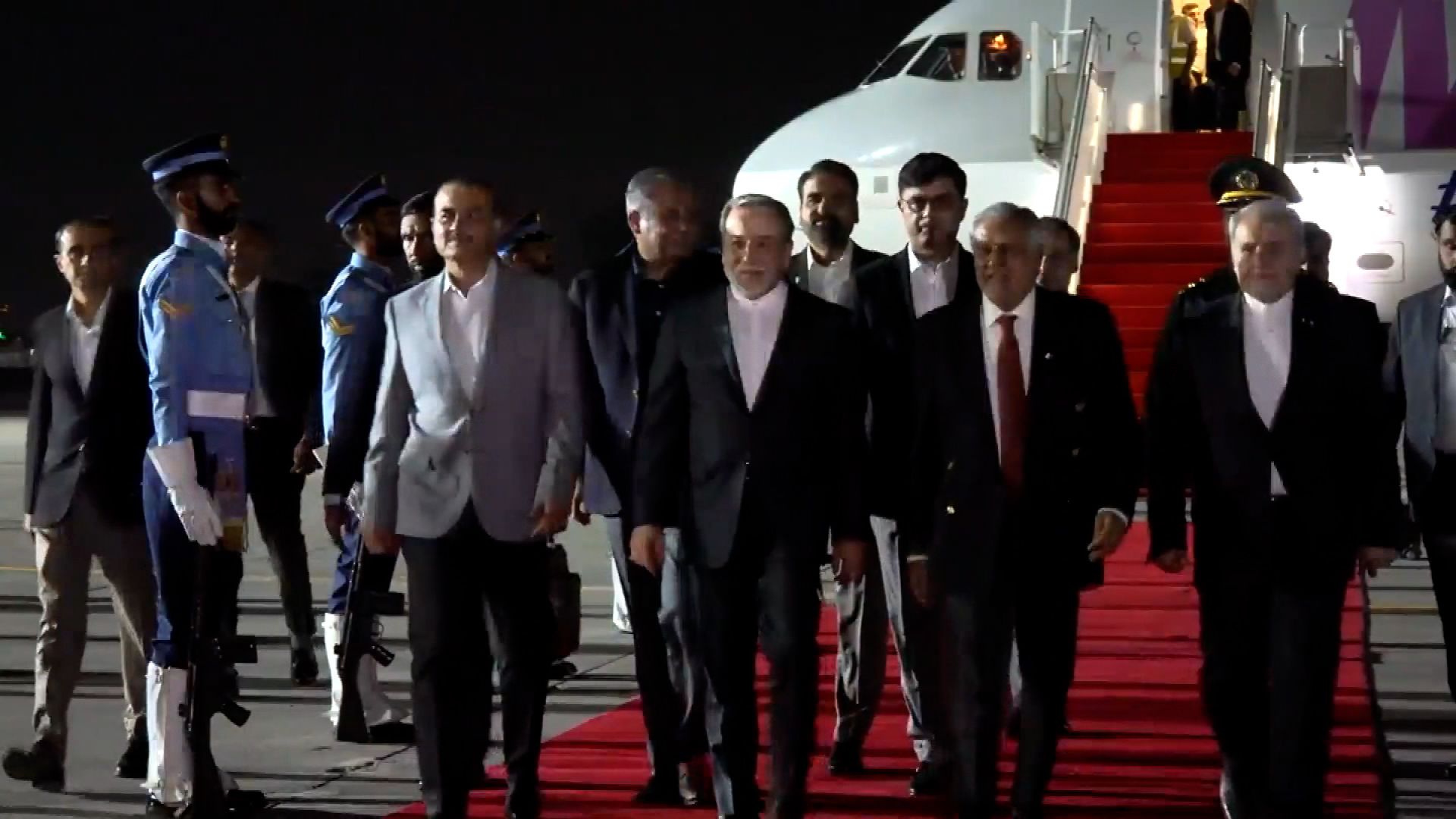
Iranian Foreign Minister Abbas Araghchi arrives in Pakistan for talks
0:45
• Source:
CNN
Video Ad Feedback
Iranian Foreign Minister Abbas Araghchi arrives in Pakistan for talks
0:45
• Source:
CNN
 Iranian Foreign Minister Abbas Araghchi arrives in Pakistan for talks
0:45
Iranian Foreign Minister Abbas Araghchi arrives in Pakistan for talks
0:45
The White House said Friday that US envoys Steve Witkoff and Jared Kushner are headed to Pakistan on Saturday to participate in direct peace talks with Iran.
However, uncertainty remains as Iran’s Foreign Ministry spokesperson Esmaeil Baghaei said on social media that “no meeting is planned.”
Here’s the latest on US-Iran developments:
- Back and forth: The latest mixed messaging between the US and Iran comes after Vice President JD Vance canceled his trip to Islamabad on Tuesday. Throughout the week, President Donald Trump offered little clarity on a timeline regarding the end of the war. Going into the weekend, White House press secretary Karoline Leavitt confirmed to Fox News that Witkoff and Kushner “will be off to Pakistan again tomorrow morning to engage in talks,” yet Iran’s Baghaei is denying those plans. Semi-official state media in Iran also reported “there no negotiations with the Americans on the agenda.”
- Potential offer: Before Iran’s Foreign Ministry spokesperson denied a second round of talks, Trump said Iran will be making an offer to the US, but he did not yet know the details. Just a day earlier, Trump suggested uncertainty about Iran’s leadership was complicating talks.
Meanwhile, in Lebanon:
- On the ground: Israeli troops and Hezbollah fighters continued to target each other throughout Friday, a day after a three-week extension of the ceasefire between Israel and Lebanon was announced.
- CNN satellite imagery: When Hezbollah fired rockets at Israel on March 2, two days after Israel and the United States launched a war on Iran, the resulting Israeli operation to destroy the group quickly became a mission to flatten swathes of southern Lebanon. A CNN review of satellite imagery reveals the scale of the destruction. See the image below:
 On April 14th, satellite imagery shows the center of Bint Jbeil severely damaged, with grey debris patterns suggesting burning consistent with demolitions. By April 23rd, the remaining buildings and structures had been completely flattened.
Read more about Israel’s military offensive in southern Lebanon here.
CNN’s Zeena Saifi, Allegra Goodwin, Rayhana Zaiter, Farida Elsebai, Mitchell McCluskey, Eyad Kourdi, Alejandra Jaramillo, Billy Stockwell, Max Saltman and contributed reporting.
Link Copied! Israeli tanks seen on the Israeli side of the Israel-Lebanon border, on Friday, April 24.
Israeli troops and Hezbollah fighters continued to target each other throughout Friday, a day after a three-week extension of the ceasefire between Israel and Lebanon was announced.
In the southern Lebanese towns of Yater and Kafra, the Israel Defense Forces (IDF) said it struck Hezbollah rocket launchers that “posed a threat to IDF soldiers and Israeli civilians.”
Israeli strikes across southern Lebanon killed at least six people and injured two more, the Lebanese Ministry of Health reported.
Hezbollah said that it targeted an Israeli armored personnel carrier in Ramyah, southern Lebanon.
In a statement, the militant group said the attack was “in response” to Israel’s destruction of homes in southern Lebanon, which Hezbollah called a “violation of the ceasefire.”
US President Donald Trump announced an extension of the truce on Thursday. Since then, each side has blamed the other for violating the ceasefire.
Israeli Prime Minister Benjamin Netanyahu has said that Israel will continue striking “any threat” in Lebanon. The terms of the ceasefire agreement outline that Israel is allowed to take “all necessary measures in self-defense.”
Meanwhile, Hezbollah said that the agreement “has no meaning” due to Israel continuing its attacks on Lebanese territory.
Link Copied! Iran's Foreign Ministry spokesman Esmaeil Baghaei speaks during an interview in Tehran, Iran, April 5.
Iran’s Foreign Ministry spokesperson Esmaeil Baghaei said in a post on X that there are no plans for a meeting between Iranian and US negotiators in Pakistan.
“No meeting is planned to take place between Iran and the US,” Baghaei wrote. “Iran’s observations would be conveyed to Pakistan.”
The spokesperson added that Iran’s Foreign Minister Abbas Araghchi is in Pakistan to meet with Pakistani officials “in concert with their ongoing mediation and good offices for ending (the) American imposed war of aggression and the restitution of peace in our region.”
Baghaei’s statement adds yet another mixed signal to a week full of uncertainty over the status of peace negotiations. The White House earlier said that Jared Kushner and Steve Witkoff would travel to Pakistan tomorrow to engage in direct talks with the Iranians.
Link Copied!
Video Ad Feedback
Iranian Foreign Minister Abbas Araghchi arrives in Pakistan for talks
0:45
• Source:
CNN
Iranian Foreign Minister Abbas Araghchi arrives in Pakistan for talks
0:45
The White House said earlier today that US envoys Steve Witkoff and Jared Kushner are headed to Pakistan tomorrow to participate in direct peace talks with Iran.
While Iran’s Foreign Minister Abbas Araghchi is indeed in Islamabad for talks about regional peace, Iranian semi-official news agency Tasnim has reported that he would not speak with US officials, as did Nournews Agency, an outlet affiliated with Iran’s Supreme National Security Council.
This uncertainty around the exact status of negotiations is nothing new – and it doesn’t necessarily mean dialogue between the two sides won’t happen, in some form or another.
In late March, there were also conflicting accounts about whether the US and Iran were in talks about ending the fighting.
US President Donald Trump said at the time that Washington had held “productive conversations” with Iran, while Tehran denied any talks with the US. That same day, an Iranian source accepted there had been “outreach” between Washington and Tehran, telling CNN that Iran was willing to listen to “suitable” proposals.
The US later held high-stakes talks with Iran in Pakistan in early April, which ended without an agreement.
Days later, Iranian state media said there were no plans to hold another round of negotiations, despite what it said were “claims by some Pakistani sources or Western media about holding the next round of Islamabad talks.”
Link Copied!President Donald Trump said Friday that Iran will be making an offer to the US but that he doesn’t know what it is.
“They’re making an offer and we’ll have to see,” Trump told Reuters in a phone interview, adding that he did not yet know the details.
Pressed on whom the US is negotiating with in Iran, Trump said: “I don’t want to say that, but we’re dealing with the people that are in charge now.”
Just a day earlier, Trump suggested uncertainty about Iran’s leadership was complicating talks.
“They’re delaying it because they — we don’t know who to deal with,” Trump told reporters in the Oval Office on Thursday. “They know who the leader is in this country. We don’t know who the leader is in Iran.”
Link Copied!
On April 14, satellite imagery shows the center of Bint Jbeil severely damaged, with grey debris patterns suggesting burning consistent with demolitions. By April 23, the remaining buildings and structures had been completely flattened.
When Hezbollah fired rockets at Israel on March 2, two days after Israel and the United States launched a war on Iran, the resulting Israeli operation to destroy the group quickly became a mission to flatten swathes of southern Lebanon.
As Israeli warplanes carried out airstrikes across the country, soldiers seized more territory in the south. Ground operations began to take on the appearance of those seen in Gaza: bulldozers tearing down buildings and demolitions razing whole villages to the ground.
Even after last week’s ceasefire agreement between Israel and Hezbollah, those ground operations have continued.
A CNN review of satellite imagery reveals the scale of the destruction, with hundreds of buildings – most of which appear to be homes – have been either completely flattened or rendered uninhabitable.
Read more about Israel’s military offensive in southern Lebanon here.
Link Copied! Smoke rises in Lebanon, as seen from the Israeli side of the border with Lebanon on Friday.
US envoys Steve Witkoff and Jared Kushner are headed to Pakistan tomorrow to participate in direct peace talks with Iran, according to the White House.
Iran’s Foreign Minister Abbas Araghchi landed in Pakistan a short time ago, according to the semi-official news agency Tasnim. But Iranian media has denied he will speak with the Americans, leaving some uncertainty around the exact status of negotiations.
Meanwhile, Prime Minister Benjamin Netanyahu said Israel will continue striking “any threat” in Lebanon, blaming the Iran-backed paramilitary group Hezbollah for trying to disrupt the peace process.
Here’s what you need to know:
- White House press secretary Karoline Leavitt said the White House has “seen some progress” from Iran in peace negotiations. Depending on the outcome of Witkoff and Kushner’s visit, “Everyone will be on standby to fly to Pakistan if necessary,” Leavitt said.
- Iran’s parliament speaker, Mohammad-Bagher Ghalibaf, is not currently expected to participate in the Pakistan talks, US officials told CNN. Ghalibaf is viewed by White House officials as the head of the Iran delegation and Vice President JD Vance’s counterpart.
- Turning to developments in Lebanon, both Israel and Hezbollah have accused one another of ceasefire violations. The terms of the fragile truce, which has been extended three weeks after negotiations in the US, state that Israel is allowed to take “all necessary measures in self-defense.” In its first remarks since the ceasefire extension, Hezbollah said the agreement “has no meaning in light of continued Israeli hostile actions.”
- On the ground, the Israel Defense Forces (IDF) said it exchanged fire with and killed six Hezbollah operatives in the southern Lebanese town of Bint Jbeil on Friday. Meanwhile, Lebanese state media reported that the IDF killed two people in the southern town of Touline. Asked about the report, the Israeli military cited an earlier statement about attacks on “Hezbollah military structures” in the region.
- An Indonesian peacekeeper has died after he was wounded in southern Lebanon in late March, raising the death toll for United Nations Interim Force in Lebanon staffers to six in the time since Israel launched its campaign.
CNN’s Alayna Treene, Nic Robertson, Sophia Saifi, Dana Karni, Mitchell McCluskey, Sana Noor Haq, Kara Fox, Zahra Ullah, Nadeen Ebrahim, Sarah Tamimi, Charbel Mallo and Ibrahim Dahman contributed to this report.
Link Copied! White House press secretary Karoline Leavitt speaks with reporters at the White House in Washington, DC, on Friday.
White House press secretary Karoline Leavitt said that the White House has “seen some progress” from the Iranians, as evidenced by Steve Witkoff and Jared Kushner traveling to Pakistan for talks.
“We’ve certainly seen some progress from the Iranian side in the last couple of days. Again, the president has made the decision to send Steve and Jared to hear the Iranians out, so we’ll see what they have to say,” she told reporters at the White House on Friday.
Asked by CNN whether that meant the US had received the “unified proposal” President Donald Trump is seeking from Iran, Leavitt did not say.
“We hope progress will be made, and we hope that positive developments will come from this meeting, and we will see,” she said.
Link Copied! Special envoy Steve Witkoff, right, and Jared Kushner attend a news conference after meeting with representatives from Pakistan and Iran, on April 12, in Islamabad, Pakistan.
Special envoy Steve Witkoff and Jared Kushner are set to leave for Pakistan tomorrow morning to engage in talks with Iran, White House press secretary Karoline Leavitt said Friday.
“I can confirm special envoy Witkoff and Jared Kushner will be off to Pakistan again tomorrow morning to engage in talks, direct talks — intermediated by the Pakistanis, who have been incredible friends and mediators throughout this entire process — with representatives from the Iranian delegation,” she told Fox News.
Leavitt said the Iranians reached out, “as the president called on them to do,” and requested the in-person conversation.
CNN reported earlier Friday that Trump would be sending the pair for talks this weekend with Iranian Foreign Minister Abbas Araghchi, and that Vice President JD Vance would be on stand by to travel to Islamabad if the talks progress.
“The vice president remains deeply involved in this entire process, and he’ll be standing by here in the United States, along with the president and the Secretary of State Marco Rubio, and the entire national security team for updates,” Leavitt said.
“Of course, everyone will be on standby to fly to Pakistan if necessary,” she added.
Tehran’s response: Semi-official state media in Iran has denied reports that Araghchi is planning to negotiate with US officials in Pakistan.
Earlier, Araghchi said he is visiting Pakistan, Oman and Russia to “closely coordinate with our partners on bilateral matters and consult on regional developments.”
Link Copied!Amid the fragile ceasefire in Lebanon, Israel has continued to launch strikes targeting Hezbollah, including one that Lebanese authorities say killed Lebanese journalist Amal Khalil while carrying out her journalistic work.
The Committee to Protect Journalists’ Middle East and North Africa Regional Director Sara Qudah explained the details of Khalil’s death:
 Video Ad Feedback
CPJ details how Lebanese journalist was killed
Video Ad Feedback
CPJ details how Lebanese journalist was killed
The Committee to Protect Journalists' MENA Regional Director Sara Qudah speaks to CNN's Becky Anderson about the killing of Lebanese journalist Amal Khalil. Khalil worked for Lebanon's Al Akhbar newspaper and was killed in an Israeli airstrike on Wednesday in the south of the country, according to Lebanon’s National News Agency (NNA).
1:30 • Source: CNN CPJ details how Lebanese journalist was killed
1:30
Link Copied!
CPJ details how Lebanese journalist was killed
1:30
Link Copied!
Rising food prices from the effective closure of the Strait of Hormuz are worsening food insecurity and malnutrition in already vulnerable countries, the World Food Programme’s regional director for the Middle East, North Africa and Eastern Europe tells CNN.
“It’s becoming like a crisis within a crisis. The markets are being inflated, the prices are affected and that will continue to send shockwaves across the globe,” Samer AbdelJaber said in an interview with CNN’s Becky Anderson.
He estimates that 45 million people will be food-insecure if the global economic crisis continues.
The World Food Programme released a report Friday warning that acute food insecurity and malnutrition levels are “alarmingly high and deeply entrenched” primarily in 10 countries: Afghanistan, Bangladesh, the Democratic Republic of the Congo, Myanmar, Nigeria, Pakistan, South Sudan, Sudan, Syria and Yemen. The report, prepared jointly by UN, European Union and partner countries, says that their outlook for 2026 “remains bleak.”
Gaza and Sudan are at particular risk, after famine was identified in both places in 2025 by the Integrated Food Security Phase Classification (IPC) system. Sudan imports more than half of its fertilizers by sea from the Persian Gulf region. AbdelJaber says WFP has had to divert its food shipments through a longer route in the Red Sea to reach the country.
He added that food prices in Gaza are 85% higher than before the Iran war.
“We wanted the sense of normalcy to get back into places like Gaza, but we’re far from this at the moment,” he said.
Link Copied!The Israeli military killed two people in the southern Lebanese town of Touline on Friday, Lebanese state media reported, less than a day after the White House ordered a three-week truce extension.
The pair was killed by an Israeli strike in the Marjayoun district “in the early hours of this morning,” according to Lebanon’s National News Agency.
When CNN asked the Israeli military about the strike, it pointed to an earlier statement citing attacks on “Hezbollah military structures” in the towns of Kherbet Selem and Touline.
At least nine people have been killed in Lebanon since April 17, when the ceasefire went into effect.
Israel’s assault on Lebanon after the Iran-backed group Hezbollah fired projectiles into northern Israel in March has killed thousands of civilians, devastated neighborhoods, contaminated farmland and destroyed livelihoods, according to the United Nations. At least 2,491 people have been killed in total so far, the Lebanese Public Ministry of Health said Friday.
On Thursday, the UN said that its aid mission saw charred cars, reams of rubble and razed homes lining the streets of southern Lebanon — where Israeli forces have occupied neighborhoods, unleashed deadly strikes and launched raids, NNA reported.
Israeli troops have also blocked Lebanese residents from returning to 55 border villages, many of which are littered with unexploded ordnance and damaged infrastructure, the UN added.
“Similar incidents have continued beyond this period – even after the present ceasefire was announced,” a spokesperson for the UN human rights chief said on Friday.
This post has been updated with additional details.
Link Copied! Iran's Foreign Minister Abbas Araghchi delivers a speech in Geneva, Switzerland, on February 17.
Iran’s Foreign Minister Abbas Araghchi said “our neighbors are our priority,” as he embarks on a trip to Pakistan, Oman and Russia amid a push for a long-lasting peace deal between Tehran and Washington.
Araghchi will “closely coordinate with our partners on bilateral matters and consult on regional developments,” he posted on X on Friday.
Iranian state media provided some further details about the trip, saying Araghchi will present Iran’s “considerations regarding ending the imposed war” during his visit to Pakistan. In Oman, discussions will “focus on regional issues and the war, while in Russia, talks will cover bilateral, regional and international developments,” semi-official outlet Tasnim news agency said.
CNN has reported that US President Donald Trump is sending his special envoy Steve Witkoff and Jared Kushner to Pakistan to participate in talks with Araghchi this weekend, citing two administration officials.
Iran has not yet commented on the latest news about potential US involvement.
Earlier on Friday, a US source and Iranian state media reported that a delegation from Tehran was expected to hold talks with Pakistani mediators – but not with US representatives.
Mediators in Islamabad have acted as a go-between for Tehran and Washington after the US-Israeli assault on Iran and retaliatory Iranian strikes triggered regional violence. However, the warring parties have so far failed to start a second round of talks in Islamabad this week, laying bare key sticking points to a definitive resolution to the fighting.
CNN’s Nic Robertson, Sophia Saifi and Billy Stockwell contributed reporting.
Link Copied!Israel will continue striking “any threat” in Lebanon, Prime Minister Benjamin Netanyahu said, a day after the US announced a three-week extension of a ceasefire.
The Israeli leader blamed Hezbollah for trying to disrupt the peace process between Israel and Lebanon.
“We have begun a process to achieve a historic peace between Israel and Lebanon, and it is clear to us that Hezbollah is trying to sabotage this,” he said.
The Israel Defense Forces (IDF) said it struck Hezbollah structures in the area of Deir Aames in southern Lebanon on Friday after a “ceasefire violation” from the Iran-backed militant group one day earlier.
The IDF also said that it exchanged fire with and ultimately killed six Hezbollah operatives in Bint Jbeil, southern Lebanon, on Friday.
The terms of the ceasefire, which the US helped negotiate, outline that Israel is allowed to take “all necessary measures in self-defense.”
Hezbollah has said that the Lebanon ceasefire “has no meaning” due to the persistent attacks from Israel.
Link Copied!President Donald Trump is planning to send his special envoy Steve Witkoff and Jared Kushner to Pakistan to participate in talks with Iranian Foreign Minister Abbas Araghchi in the coming days, two administration officials tell CNN.
Vice President JD Vance is not currently planning to attend given Iran’s Speaker of the Parliament, Mohammad-Bagher Ghalibaf, is not participating either, the officials said. Ghalibaf is viewed internally by White House officials as the head of the Iran delegation and Vance’s counterpart.
However, the vice president will be on standby to travel to Islamabad if talks progress, the officials said, and members of his staff will be in Pakistan and attending the negotiations. Kushner and Witkoff have been working with Iran officials on a potential agreement on Tehran’s nuclear material for months.
Link Copied! The Kremlin in Moscow, Russia, on May 19, 2019.
When Iran’s Foreign Minister Abbas Araghchi embarks on his foreign tour, on top of visiting key mediators Pakistan and Oman he’ll also head to Russia, highlighting the countries’ long standing partnership.
Russia has remained a critical diplomatic ally for Iran throughout the conflict with the US.
The Kremlin has repeatedly offered to take custody of Iran’s enriched uranium, proposing to store or reprocess it on Russian soil.
While this could theoretically resolve some of the US key demands in negotiations to end its war with Iran, Trump reportedly rejected Russian President Vladimir Putin’s offer, presumably wanting to stave off Moscow – already a global leader in nuclear energy - from gaining even more leverage.
Beyond uranium, Iran and Russia signed a 20-year treaty in January 2025 strengthening their economic, military and political partnership. Russia views US strikes on Iran as “unprovoked aggression,” but crucially the agreement signed by Tehran and Moscow stopped short of a mutual-defense pact.
Earlier today, Russia’s Foreign Minister Sergey Lavrov said he “highly appreciated” Islamabad’s mediation efforts between Iran and the US in a call with his Pakistani counterpart Mohammad Ishaq Dar, while voicing Moscow’s “readiness to contribute.”
In March, CNN reported that Russia was providing Iran with intelligence about the locations and movements of American troops, ships and aircraft, according to multiple people familiar with US intelligence reporting on the issue, the first indication that Moscow sought to get involved in the war.
Araghchi’s upcoming trip to Moscow is a sign Tehran will be looking to consult its partners in the Kremlin amid the conflict.
Link Copied!A US-sanctioned vessel sailing under the Curaçao flag traversed the choked Strait of Hormuz, according to an Iranian news agency, as Tehran maintains its grip on the key waterway.
The Cuba supertanker “recently passed through the Strait of Hormuz” and anchored east of Larak Island, according to Iran’s semi-official outlet Mehr News. The ship has been on the US sanctions list since 2024 for transporting Iranian oil shipments to China, Mehr News added.
“The United States claims it has imposed a blockade on the Strait of Hormuz and does not allow vessels linked to Iran to pass. However, according to reports, several Iranian ships have so far exited through the strait or entered the region via this waterway,” the agency said.
Remember: The pace of vessels through the channel — where ships carry one-fifth of global crude oil supplies — has stemmed to a near halt since the US-Israeli attack on Iran prompted retaliatory Iranian attacks in the region. In the ensuing weeks, Tehran and Washington launched mutual blockades on the waterway, with Iran attacking non-allied vessels and the US targeting ships from Iranian ports.
On Friday, three more ships transited the strait, the trade analytics company Kpler said.
The US military has redirected at least 33 ships since the White House leveled the blockade on April 13, US Central Command said on Thursday.
However, at least 26 of shadow fleet vessels have breached the US blockade line as of Monday, according to Lloyd’s List Intelligence, a maritime intelligence firm. On Wednesday, 10 shadow fleet tankers were heading toward the Persian Gulf area, the firm added.
Even so, the US has intercepted Iranian-linked vessels outside the Persian Gulf — including a sanctioned tanker in the Indian Ocean his week.
This post has been updated with more information.
Link Copied! Smoke rises from the town of Al-Khiyam, southern Lebanon, as Israeli forces continue demolishing homes despite a temporary ceasefire.
Hezbollah has said the ceasefire in Lebanon “has no meaning in light of continued Israeli hostile actions,” in the first remarks from the militant group since the White House announced an extension of the fragile truce overnight.
Any ceasefire that is not “directly linked to Israeli withdrawal from Lebanese territory affirms the firm and final right of the Lebanese people to resist the occupation and expel it from our land,” the Iran-backed group said.
Israel’s ambassador to the US, Yechiel Leiter, said Thursday the military will remain in a “defensive position” in southern Lebanon – even as the UN warned the presence of Israeli troops violates a decades-long resolution to permanently end attacks by all actors.
In a separate statement, Mohammad Raad, the head of the Hezbollah parliamentary bloc, accused mediators of constructing a “deceptive scheme” and “providing cover for Israeli aggression” after a spate of deadly Israeli military attacks in recent days.
“Any supposed ceasefire that grants the occupying enemy in Lebanon a special exception to open fire… is not a ceasefire at all,” added Raad.
The original six-point ceasefire plan mediated by the US stated that Israel would “preserve its right to take all necessary measures in self-defense.” The White House called on the Lebanese government at the time to prevent Hezbollah “from carrying out attacks, operations or hostile activities against Israeli targets.”