This story originally appeared on Grist and is part of the Climate Desk collaboration.
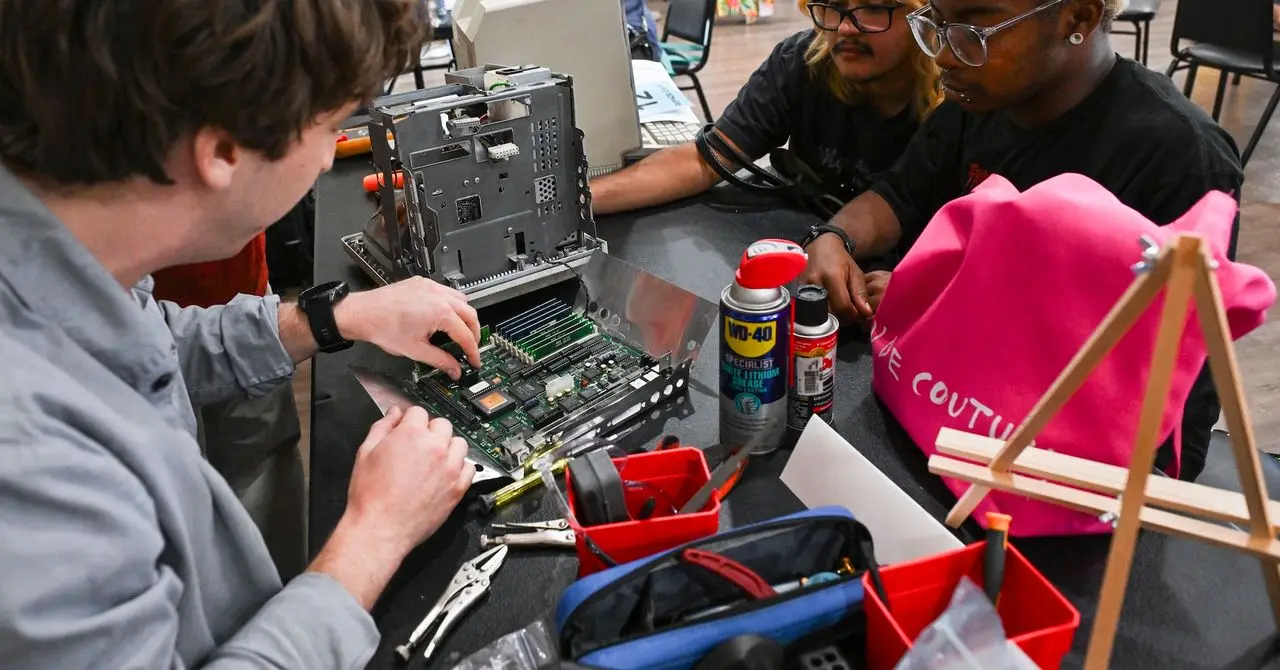
On an unusually cool and rainy Saturday morning in Decatur, Georgia, dozens of people filed into a warehouse at the back of a church parking lot, their arms full of what a less hopeful group might call junk. Some carried broken lamps, glitching electronics, or cracked furniture. Others walked in with toolboxes, multimeters for testing electric currents, and cans of WD-40. Beneath extension cords dangling from the rafters, they sorted themselves into smaller groups: the volunteer electricians, tailors, luthiers, carpenters, and at least one cutler (knife sharpener), commandeering nearby worktables and passersby as needed.