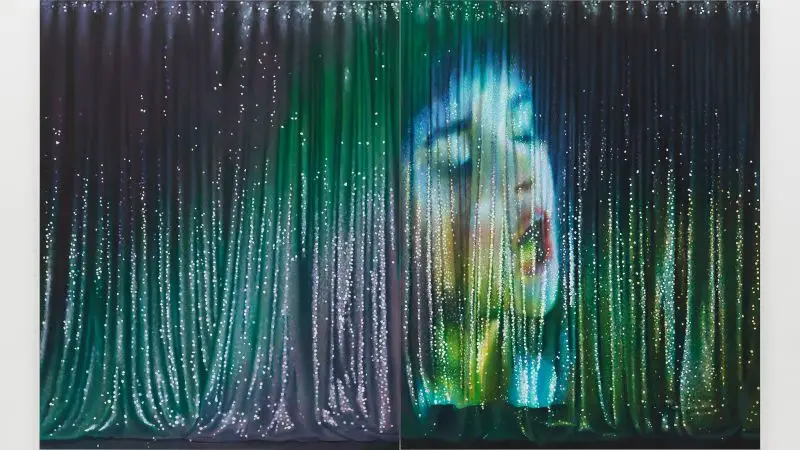
“Curtains make people behave very differently,” said Louise Giovanelli. The young British painter has seen it first-hand. Her life-size oil paintings of undulating drapes, where folds of velvet or tinsel absorb and refract the glow of a stage spotlight, often become the backdrop for art gallery selfies. “People always go and take selfies in front of the curtains,” she said. “They don’t do it in front of any other painting.”
This partition of fabric, Giovanelli thinks, gives people “permission” to perform. Karaoke, theater, even bingo night — “it’s a signal for people,” she said, sitting in a tidy upstairs meeting room at the White Cube gallery in central London. Curtains are not classist, either. “You see them in very grand theatrical contexts, like theaters and cinemas and The Proms,” she said of the prestigious British classical music festival. “But then you also find them in seedy nightclubs and brothels and working men’s clubs.”