
Writing is not supposed to be a path to fame and riches. There's a reason why the Monty Python character Ernest Scribbler lives not in a bijou Knightsbridge mews house, with a bolthole in the Languedoc, but instead in a grimy garret of his mother's house – where he dies broke, jaundiced and alone. Writing doesn't pay.
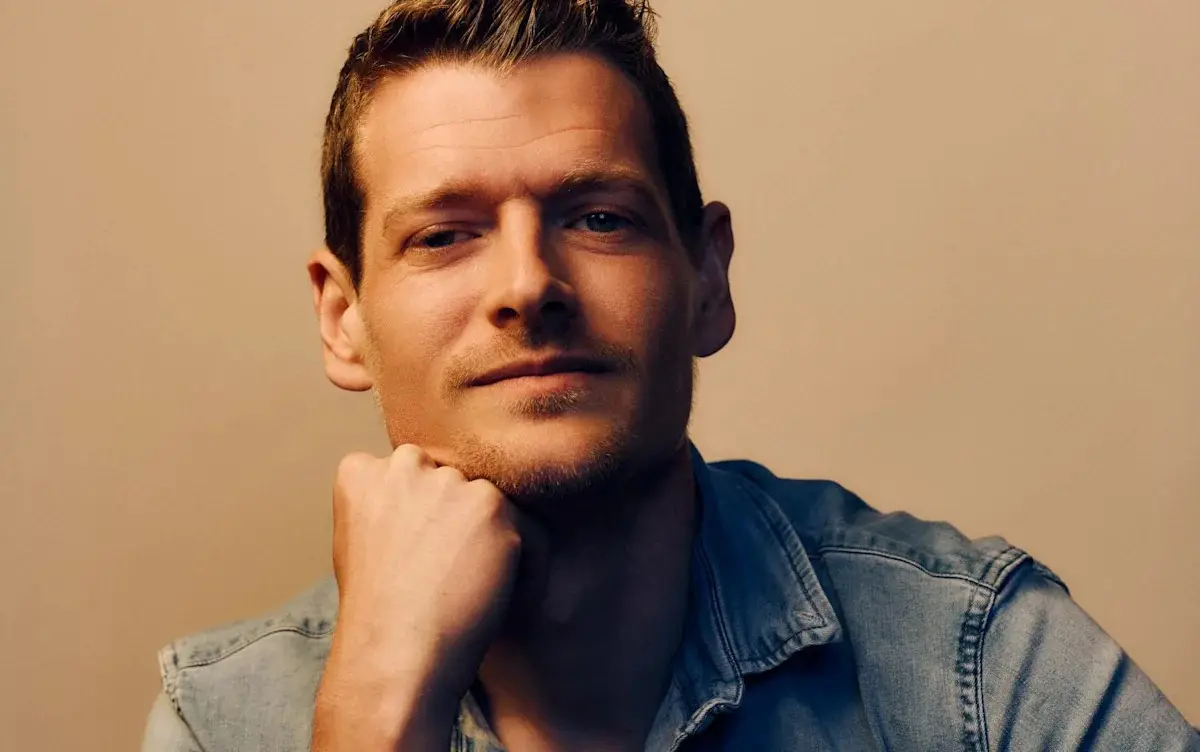
Well, if that's the case, no one seems to have told Nicholas Binge. The 36-year-old writer has become an overnight sensation. His novels, Ascension and Dissolution, have been optioned by Hollywood, and his short story Extremity is being developed for TV.
Meanwhile, his unpublished novel White Smoke is becoming a limited series made by production-company-of-the-moment A24, with Benedict Cumberbatch to star. He's also writing a Netflix show, The Understudy, with Phil Lord and Chris Miller, the duo behind The Lego Movie and Project Hail Mary. And finally, his new novel, Exhumation, due out in October, already has significant buzz; no doubt, it too will be optioned soon. Industry chatter has it that The Understudy – based on a 23-page short story – was sold for more than $1m (£750,000). The publishing rights to White Smoke, meanwhile, were won for a six-figure sum after a seven-way bidding tussle; A24 likely paid handsomely to adapt it too.
AdvertisementAdvertisementAdvertisementAdvertisement"It's quite literally living the dream, isn't it?" he tells me, with a laugh. "It's the dream most writers have – and I'm grateful for it every day."
But behind this dream lies a lot of graft. We're talking over video call, and Binge is phoning in from his home in Edinburgh. Boyishly enthusiastic, he spends the entire time with his legs pretzled beneath him: it's either a yogi power move or an effort to beat writer's hunch. Impressive hip flexibility aside, there's little to suggest a profound transformation in his circumstances.
The way he tells it, Binge parlayed early Hollywood interest in his work into a series of conversations with producers. "I almost treated it like market research: 'What sort of stories is no one else bringing you?' It sounds calculating, but I saw this as a once-in-a-lifetime opportunity and I wanted to capitalise on it."
The result of these conversations was White Smoke, which will be published next year, and is written under the pseudonym Nick Brucker. A crime caper set in the Vatican, it wears its genre unashamedly: there's a character called The Rat, a supervillain who goes by the name of Dante, and the opening pages see the newly elected pontiff jump off the balcony of St Peter's Basilica. Corralling Dan Brown's wackiness into Raymond Chandler's seamless prose, it's one of the most purely pleasurable reading experiences I've had for a long time.

"I went into it very commercially minded," Binge says. "A heist in the Vatican was the most pitchy thing that I could think of… Perhaps that makes me a sellout. But as a writer, there's this idea that you either do it for the love of art or you do it to earn a living. That's nonsense – I had more fun writing this book than any of the others." Writers, he believes, shouldn't have to apologise "for wanting to get paid for their work".
AdvertisementAdvertisementDespite his snowballing career, it was only this year that Binge felt able to step back from his day job to concentrate fully on writing. A secondary school English teacher in Scotland, the fillip of interest in Ascension meant he could afford to go part-time, "but I never had the security of making it my full-time job". Now, thanks to White Smoke and The Understudy, he can give it a go – "provided I don't do something stupid, like buy a yacht or something".
Growing up, Binge was steeped in the confidence that a creative life was possible. His grandfather was the celebrated composer Ronald Binge who, among other works, wrote the waltz Sailing By, which introduced the late-night shipping forecast on BBC Radio Four.
"I never knew him personally, as he died before I was born, but his presence loomed large over my life," Binge recalls. "It especially impacted my father, who was Ronald's son – he was a maths teacher and headmaster, but he's also one of the most creative, eclectic people I've ever come across. He's an artist, and a mathematician: very much a Renaissance man."

Binge's grandfather was the composer Ronald Binge, who wrote the waltz Sailing By, which introduced Radio Four's late-night shipping forecast
Born in Singapore, where his father was teaching, Binge grew up mainly in Geneva; his father was headmaster of the international school there. After his degree, Binge followed in his parents' peripatetic footsteps, teaching abroad in Hong Kong.
AdvertisementAdvertisementHis work is characterised by a similar restlessness. His breakout novels, Ascension and Dissolution – both of which I devoured over the course of a single weekend – are firecracker speculative thrillers. Ascension tells the story of an expedition to climb a vast mountain that has mysteriously appeared in the middle of the ocean. Told as a series of letters written by one of the surviving explorers, it draws on classic Gothic fiction such as Dracula. As the unfortunate pioneers mount ever higher, it moves towards the "cosmic horror" territory of HP Lovecraft. Meanwhile, Dissolution is a time-travelling love story – yet its nested narratives recall Christopher Nolan's directorial mind games and the book hinges on a lover's duet from Romeo and Juliet. There's nothing hard-won about the entertainment of Binge's books, but I found the concepts behind them lingering, whirring away for days afterwards.
As a child, Binge was "fed a steady diet of Golden Age sci-fi" by his father – Isaac Asimov, Robert A Heinlein and Frank Herbert. But the writer who influenced him the most was Philip K Dick. "One of my favourite moments of any of his books is in the story Time Out of Joint," he says, looming into the screen, arms wind-milling with excitement. "A character goes to pull a light cord in his bathroom – then he blinks, because there's no light cord there, only a switch. He's lived in that house for 20 years, so why the hell did he try to pull a cord? I love that sense that [reality] can be whipped out from beneath you, and there's always a layer underneath…"
His first attempt at writing fiction was "an absolutely derivative" fantasy novel, complete with invented languages, races and a map: "God, it was awful. No one will ever see it". But as his career progressed, Binge has found his writing straying promiscuously between genres. "I'm a big believer that human beings are essentially speculative animals. We process the world through stories. To my mind, the most perfect horror story of all time is Franz Kafka's Metamorphosis. It's Kafka trying to explain how he feels in the world, and the most honest way he has of doing that is by turning the main character into a cockroach."
Existential questions thrum through Binge's work. Even among the genre thrills of White Smoke, characters wrestle with their belief in God. "I find religion fascinating and hugely valuable," Binge says. "If you put a gun to my head and forced me to describe myself, I'd have to say I was an atheist, but religion is baked into my consciousness." His mother is a devout Catholic, and Binge spent his early childhood shuttling between church services, Bible classes and Sunday School.
AdvertisementAdvertisementThat was until the age of 15, when his father gave him a copy of Richard Dawkins's The God Delusion – "there was a bit of a wrangling between my parents for my soul," he jokes. Dawkins's new atheism won Binge over, but he never bought into the condescension that came with it. "Dismissing religion dismisses the way human beings tell stories to make sense of life and connect with each other. If you refuse to engage with [religion], you're refusing to engage with a fundamental part of what makes us human, what lies at the core of our souls."
Yet pursuing a career in writing today can feel like its own act of faith. The average salary for a British author is £4,000 a year; some commentators believe we are entering a post-literate world.
Rubbish, argues Binge. "There's a continual doomerism in the publishing world. My agent has been involved in the industry for more than a decade and every year he's been told publishing is dying – and every year publishing houses make more money than the year before.
"That said, it is harder to make a living as a working writer than ever before. There's this real stratification in that fewer authors are getting more investment and [we're seeing] the death of the mid-list. But I think that's less a problem that's unique to publishing, and more a reflection of what's been happening across every industry."
AdvertisementAdvertisementFor Binge, no matter how far-flung his imagination, it will always be grounded in the reality of life at home. He met his wife, Allys, during their teacher training and the couple have two young children, a girl and a boy.
"Ernest Hemingway might disagree, but the mythology around being a lone writer is really silly," he says. "You need community, you need support. That's how you succeed in this game. My family is as much part of me and my achievements as anything. I couldn't imagine life without them."
Love, family, art. The stuff of our conversation – and of Binge's books – can seem like old-fashioned ideas. But, then again, perhaps our brave new world could do with a few more of those.
Exhumation is published on October 22. White Smoke follows next May